Categories: Indigenous Rights, Kairos Network
Tags: Alberta Partners Exchange, Indigenous Rights, Indigenous Teachings, Indigenous Wisdom
Our recent Global Partner Exchange in Edmonton, Alberta was an incredibly powerful and meaningful experience, one that I believe will stay with all of us for many years to come.
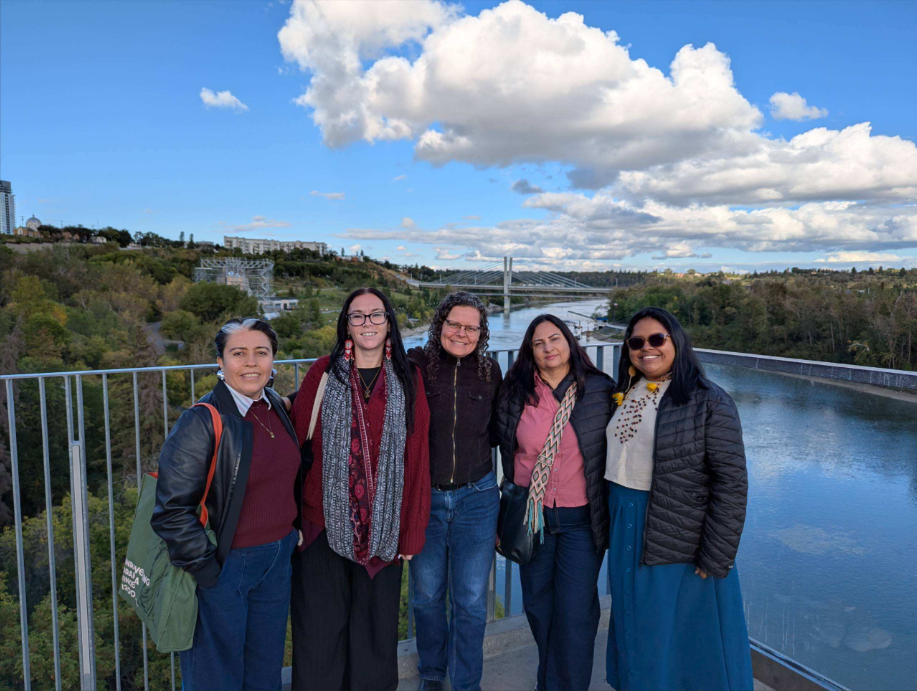
With me from Kairos Canada were Shannon Neufeldt, Member Relations & Network Coordinator, and Silvia Olguin, Latin America Partnerships & Gender Justice Coordinator.
We had the honour of welcoming two remarkable women from Colombia, Ana Teresa Ruerda Lozada and Paola Chindoy, who travelled to Canada to share their knowledge, experiences and stories while learning alongside Indigenous communities here on Turtle Island.
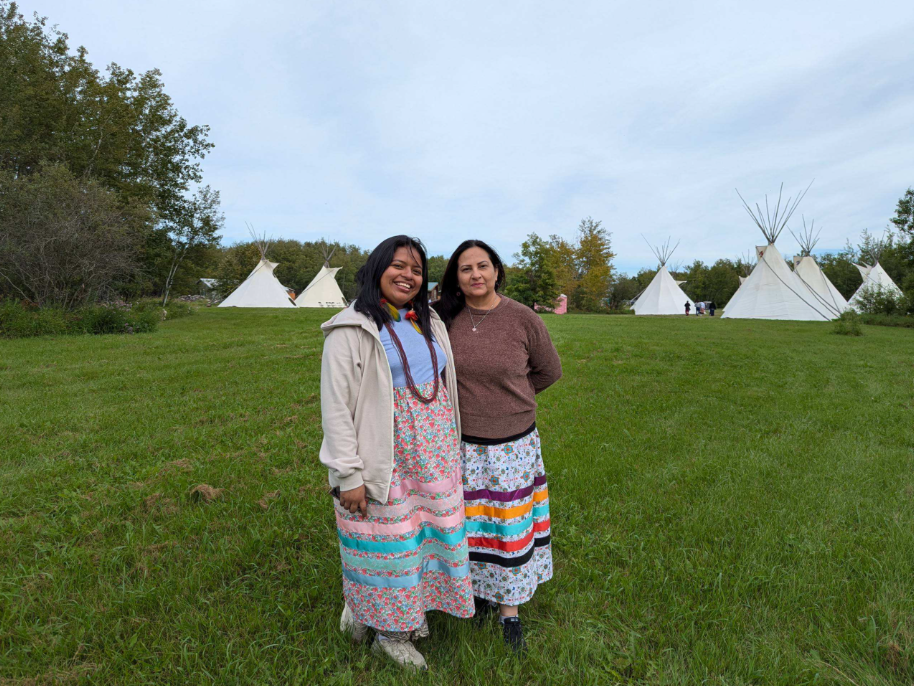
Paola is a Kamëntšá Indigenous leader from Mocoa, Colombia, and president of ASOMI, while Ana is a Project Coordinator of the Organización Femenina Popular (OFP), a Kairos partner of the Women Peacebuilders project.
What made this exchange particularly significant was understanding the circumstances from which these women were coming and what it truly meant for them to travel to Canada.
Canadian mining companies have a significant presence in Colombia’s extractive sector. Mining threatens Indigenous territories, contaminates lands and waters and places communities at significant risk. Women land defenders and human rights advocates are particularly targeted through threats and assassinations simply for protecting their territories, their people and their rights. The harmful impacts associated with these operations have contributed to deep mistrust and fear of Canada among some of the affected communities.
For Ana and Paola, travelling to Canada was not simply an opportunity for cultural exchange. It required tremendous courage and trust. They arrived carrying understandable fears and reservations about a country they associated with the destruction of their lands and the threats facing their people. Before agreeing to participate, Paola sought guidance from the Elders in her community. She entered into ceremony to seek spiritual guidance on whether this journey would be safe and beneficial.
Knowing this made their presence even more meaningful. They were taking a significant step into the unknown, placing their trust in people they had never met, in a country they had every reason to approach with caution.
We started the Exchange with a three-day Indigenous retreat at Blue Quills University, a former residential school that has since become a place of Indigenous education, cultural revitalization and healing.
There, we felt the profound power of gathering on sacred ceremonial lands connected to a place with such a painful history, yet witnessing Indigenous culture, language, ceremony and traditional knowledge being practiced, protected and passed on to future generations.
The retreat began in ceremony and throughout our time there, we were blessed to learn from many Elders and Grandmothers who generously shared their knowledge, teachings and experiences. We learned about cultural protocols, the sacredness of traditional medicines and the responsibilities that come with gathering and using the gifts Mother Earth provides.
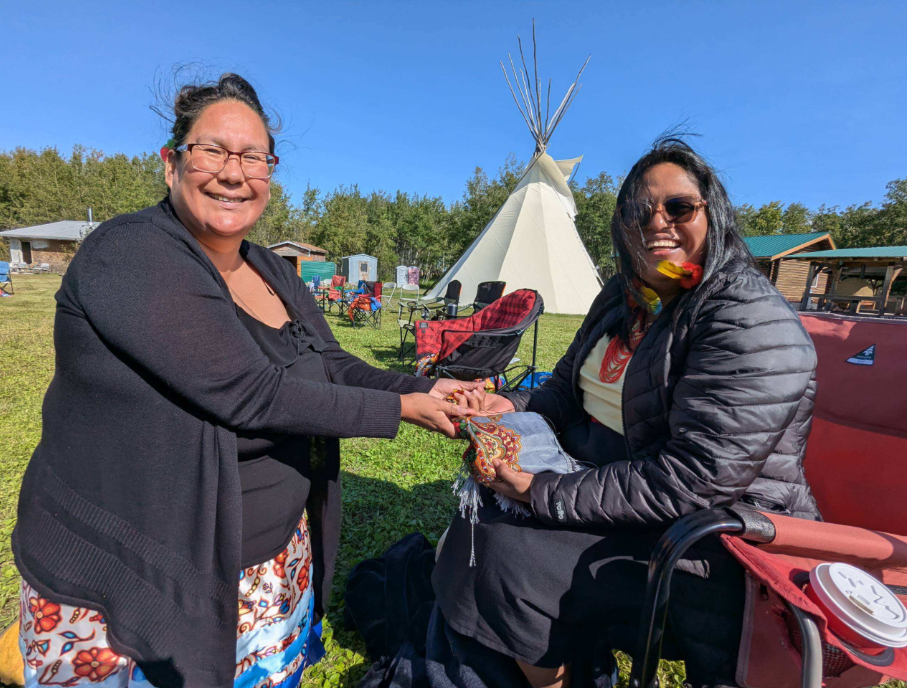
One of the most memorable experiences was participating in a medicine walk, where we learned about the plants, their traditional uses and the healing properties they carry. We were given the opportunity to respectfully harvest medicines, including sweetgrass and mint, while learning the importance of making offerings, expressing gratitude and asking permission before taking anything from the land.
These teachings reinforced something deeply important: the land is not simply a resource to be used. It is living, sacred and deserving of respect. Our relationship with Mother Earth is one of reciprocity, responsibility and gratitude.
That evening, Elder Leo and Grandmother Pracilla welcomed us into their home, where we participated in a traditional Sweat Lodge Ceremony. For everyone in our group, this was our first experience taking part in a Sweat Ceremony. It became one of the most profound moments of our journey.
Being welcomed into such a sacred space was an incredible honour. The ceremony created an opportunity for reflection, connection and spiritual healing. One particularly beautiful moment came when Paola shared a traditional song in her Indigenous language during one of the rounds. When we heard her voice and received a piece of her culture within a ceremony here on Turtle Island, the distance between our communities seemed to disappear. Although we came from different territories, spoke different languages and carried different cultural traditions, we were sharing something deeply sacred together.
It was a beautiful reminder that ceremony has the power to bring people together beyond borders, language and geography.
Another experience that deeply impacted me was our conversation with two Indigenous women who work at a traditional birthing centre.
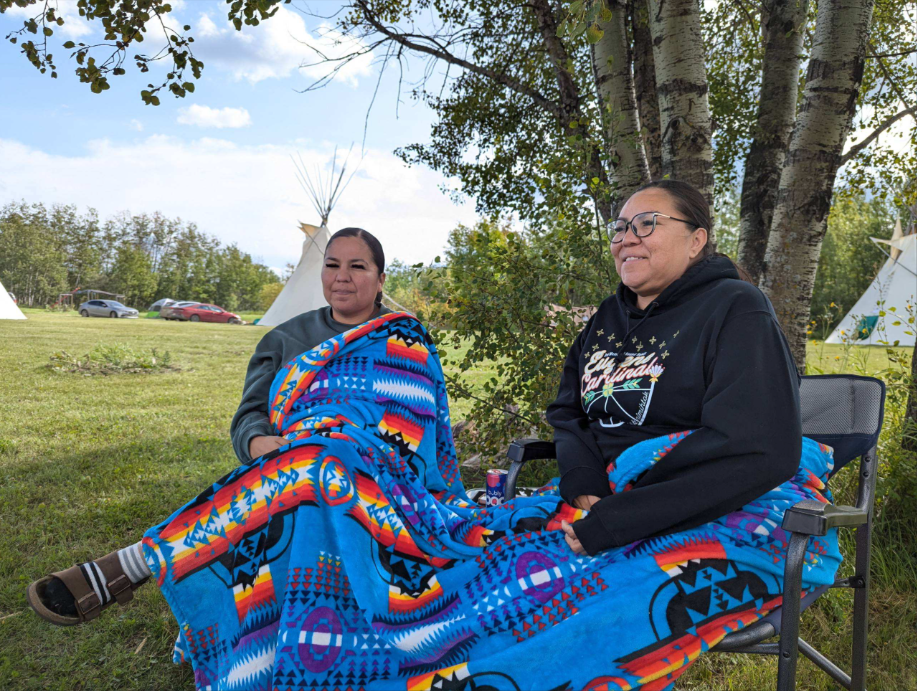
They shared the beautiful work to restore traditional birthing practices and reconnect Indigenous mothers and families with the cultural teachings, ceremonies and medicines surrounding pregnancy and childbirth.
We learned that throughout pregnancy, expectant mothers receive guidance, support and traditional medicines from the Grandmothers. When the time comes to give birth, the mother is supported through ceremony on sacred ceremonial lands, surrounded by the care and knowledge of the women and Elders.
The Grandmothers provide traditional medicines and support throughout the birthing process, honouring childbirth as a sacred transition rather than simply a medical event.
One of the most beautiful teachings shared was what happens when the baby enters the world. Everyone becomes silent as the lead Grandmother welcomes the child through a traditional song in their language and gives the baby a name. The child is then welcomed through a sacred herbal bath.
We also learned about the ceremonies surrounding the placenta and umbilical cord. Once the mother has recovered enough, she and the Grandmothers walk together to choose a meaningful place to return the placenta to Mother Earth. The umbilical cord may be placed somewhere symbolic of a quality or path the mother hopes her child will develop. For example, a mother wishing for her child to grow in knowledge and wisdom might choose a book, while a mother hoping her child develops a strong work ethic might choose an anthill.
These practices reflect a beautiful understanding that our connection to the land, our ancestors and our purpose begins long before we take our first steps in this world.
What made this conversation even more meaningful was hearing Ana and Paola share just how similar these teachings were to the birthing traditions within their own communities.
They explained that the womb is considered deeply sacred and that young women are taught from an early age about its spiritual significance. Pregnancy and childbirth are also honoured through ceremony, traditional medicines and the guidance of women Elders. One difference they shared was that, within their traditions, the placenta is returned through the sacred fire rather than being buried in the earth.
Although the practices differed, the values and beliefs behind them were remarkably similar.
We were all deeply moved by these conversations and by the incredible work to reclaim Indigenous birthing traditions. It is our hope that these culturally grounded approaches to pregnancy and childbirth continue to grow and become more accessible to Indigenous women and families across Canada.
Throughout the retreat, we also had the opportunity to make traditional rattles using moose hide and participate in other cultural teachings and activities.
Each experience provided another opportunity to learn, reflect and build meaningful relationships with the Elders, Grandmothers and community members who welcomed us so generously.
One of the most powerful outcomes of this exchange was witnessing Ana and Paola begin to recognize just how much their communities in Colombia have in common with Indigenous Peoples here on Turtle Island.
While our languages, ceremonies and cultural practices may differ, there are extraordinary similarities in our relationships with the land and waters, the sacred responsibilities of women, the importance of Elders and ancestral knowledge and the ongoing struggles to protect our territories, cultures and future generations.
Following the retreat, we participated in a Kairos Blanket Exercise, which explores the history of colonization and its ongoing impacts on Indigenous Peoples in Canada. Ana and Paola also facilitated their own Body Territory Exercise, sharing perspectives and experiences rooted in the realities facing women and communities in Colombia.
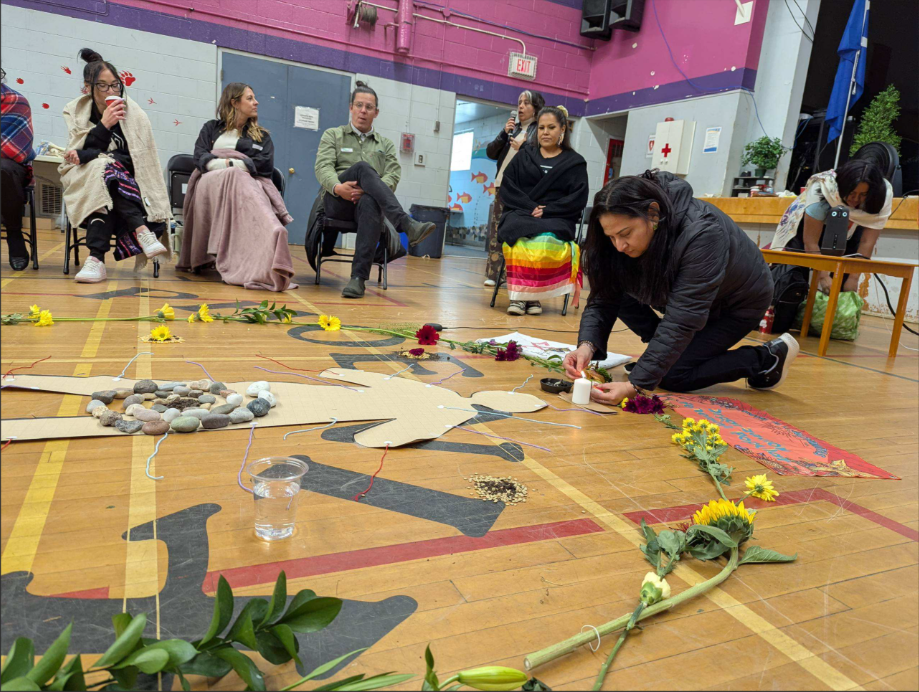
Together, these activities created a powerful space for learning, reflection and dialogue.
Before arriving in Canada, Ana and Paola were familiar with the history of residential schools but had limited knowledge of the many other colonial policies, injustices and systems of oppression that Indigenous Peoples here have endured and continue to resist.
Through the Kairos Blanket Exercise, they learned more about the displacement of Indigenous communities, the loss of lands and resources, the suppression of languages and cultural practices and the intergenerational impacts of colonization.
During our reflections afterward, one teaching stood out to them in particular.
They spoke about learning how Indigenous Elders and Grandmothers in Canada were once forced to practice their ceremonies in secret because cultural and spiritual traditions had been prohibited. Despite the risks, these knowledge holders protected their ceremonies, medicines and teachings, ensuring they would survive for future generations.
For Ana and Paola, this was an incredibly powerful connection to the realities their communities face today.
They explained that in Colombia, Indigenous women, land defenders and advocates put their safety and lives at risk simply by speaking out against the destruction of their lands and waters. Many have faced threats, violence and even lost their lives while fighting to protect their communities.
Hearing this connection was deeply emotional.
The struggles that Indigenous Peoples in Canada faced generations ago, and continue to experience in different forms today, are reflected in the experiences of Indigenous communities in Colombia.
Across different continents, Indigenous Peoples continue to defend their lands, waters, cultures and right to self-determination against systems that too often prioritize profit and resource extraction over human rights, environmental protection and the well-being of communities.
Yet what stood out to me most was not only the similarities in our suffering, but the similarities in our strength.
Despite generations of colonial violence, displacement and attempts to erase Indigenous identities, our peoples continue to stand strong. Our ceremonies are still being practiced. Our languages are being revitalized. Our Elders and Grandmothers continue to pass down sacred knowledge. Our women continue to lead movements to protect the lands and waters that sustain all life.
We have endured so much, yet we continue to rise, resist, heal and reclaim what was taken from us.
And this resilience is something that connects Indigenous Peoples across the world.
Perhaps the most beautiful and meaningful outcome of the entire exchange was witnessing the transformation in how Ana and Paola viewed Canada and the people who live here.
They arrived carrying fear, uncertainty and resentment rooted in the harms from Canadian resource extraction in their homeland.
Their concerns were real, and their experiences deserved to be heard, acknowledged and respected.
But through the relationships they built, the ceremonies in which they participated and the stories and teachings shared by Indigenous Elders, Grandmothers and community members, they began to see a different side of Canada.
They discovered that Indigenous Peoples here are also fighting to protect their territories, waters, cultures and communities. They learned that we too have experienced tremendous injustice, that we continue to face systemic barriers and that our ancestors made extraordinary sacrifices to ensure our cultures and ceremonies would survive.
Most importantly, they discovered that they were not alone in their struggles.
By the end of the exchange, the fear and uncertainty with which they arrived had begun to transform into trust, love, respect and a profound sense of connection.
They spoke about how differently they now view the Indigenous Peoples who they met in Canada and how deeply they appreciated the kindness, openness and generosity they had experienced.
This was especially meaningful knowing how much courage it had taken for them to make the journey in the first place.
What began as an exchange between women from different parts of the world became something much greater. It became a gathering of sisters, knowledge holders, land defenders and advocates who recognized themselves in one another’s stories.
It was a reminder that while colonial borders may separate us geographically, they do not erase the relationships, responsibilities and values that connect us.
Throughout this journey, I found myself reflecting deeply on the teaching of All My Relations and what it truly means to recognize that we are all connected.
We often speak about interconnectedness when discussing our relationship with Mother Earth, the waters, the animals, the plants and all living beings. But the Exchange allowed us to experience this teaching in a deeply human and personal way.
We witnessed how the experiences of Indigenous women in the Amazon are connected to the experiences of Indigenous women on Turtle Island.
We saw how the protection of a river in Colombia is connected to the protection of a river in Canada. How the destruction of sacred lands in one part of the world reflects the same struggles faced by communities thousands of kilometres away. How the preservation of ceremony, language and traditional knowledge is not only about protecting the past but ensuring a future for generations yet to come.
We learned that our struggles are not isolated and that neither is our strength.
When one community stands up to protect its waters, it stands up for us all. When an Elder passes down a teaching, they are helping preserve knowledge that benefits generations beyond their own. When Indigenous women come together to share their experiences, they create relationships that can strengthen movements, build solidarity and inspire meaningful change across borders.
For me, this was the greatest teaching of the entire Exchange.
All My Relations is not simply something we say. It is something we must live through our actions, our responsibilities and the ways we care for one another and the world around us.
As I reflect on our time in Alberta, I am filled with gratitude for the Elders, Grandmothers, Knowledge Keepers and community members who welcomed us with such warmth, generosity and love.
They created spaces where everyone felt safe, respected and comfortable asking questions, sharing stories and learning from one another. They welcomed Ana and Paola not as strangers from another country, but as sisters with whom they shared a common connection.
The relationships built throughout this exchange will continue long after our time together. I truly believe this.
Many of the Elders and Grandmothers expressed their excitement about future opportunities to connect and collaborate, and I believe there is tremendous potential for these relationships to grow into meaningful partnerships rooted in mutual learning, solidarity and shared advocacy.
This exchange also reinforced for me the importance of creating opportunities for Indigenous Peoples and global partners to come together, not simply to discuss the challenges we face, but to celebrate our cultures, honour our resilience and learn from the ways our communities are reclaiming their knowledge and traditions.
We have so much to learn from one another. We can accomplish so much when we stand together.
I came away from this experience with a renewed appreciation for the strength of Indigenous women, the wisdom of our Elders and Grandmothers and the incredible power of ceremony and relationship-building.
But above all, I came away with a deeper understanding of how connected we truly are.
Two women travelled from Colombia to Canada carrying fear and uncertainty. They returned home carrying new relationships, shared teachings, beautiful memories and the knowledge that, across the world, there are people who understand their struggles and stand alongside them.
And for me, that is what made this Global Partner Exchange so incredibly special.
We may come from different lands, speak different languages and practice different traditions, but we share a responsibility to protect Mother Earth, honour our ancestors and ensure that future generations inherit a world where our cultures, lands and waters continue to thrive.
We are not separate in our struggles, and we are not separate in our strength. We are connected through the lands, the waters, our ancestors and the generations yet to come.
All My Relations.
By Brandi Bilodeau, Indigenous Rights Coordinator