Together, we can continue building the future we want to see.
For 25 years, Kairos has united people of faith and conscience to advance Indigenous rights, climate justice, migrant justice, peace and human rights. Together, communities and partners have created space for reconciliation, strengthened movements for justice and shown that faithful action can create lasting change.
Now, as Kairos prepares to become an independent organization in 2027 and launch a new strategic plan, we are renewing our commitment to a just, equitable and sustainable future—one where Indigenous rights are respected, communities thrive on a healthy planet and people power creates systems-level change.
Your donation of $150 or $75 can empower communities, strengthen partnerships, support advocacy and inspire action for justice.
Every September 30, orange shirts appear across the country. We wear them to honour Survivors of residential schools, to remember the children who never returned home and to recognize the families and communities who continue to live with the impacts of the residential school system. Orange Shirt Day and the National Day for Truth and Reconciliation ask us to remember. But they must also ask something more of us: Today, you wear your orange shirt. What will you do tomorrow?
Reconciliation cannot begin and end on September 30. When the orange shirts are folded and put away, the truths they represent remain. Survivors continue to carry their stories. Families continue to experience the intergenerational impacts of residential schools. Communities continue the work of reclaiming languages, cultures, ceremonies, kinship systems and ways of knowing that colonial policies attempted to erase.
And Indigenous Peoples continue to demonstrate something that residential schools could not take away: strength, resistance, love, knowledge and connection to culture, community and the land.
Truth requires us to listen
For generations, Indigenous Peoples have been telling the truth about residential schools. Survivors carried these truths long before Canada was prepared to listen. Reconciliation requires more than learning about Indigenous Peoples from a distance. It requires making space for Indigenous Peoples to tell our own stories, in our own voices.
That means listening to Survivors, reading Indigenous authors and learning from Indigenous educators, Elders, Knowledge Keepers, artists, filmmakers and storytellers. It also means recognizing that Indigenous stories are not only stories of trauma. They are stories of survival and resurgence. They are stories of families reconnecting, languages being reclaimed, ceremonies continuing, children learning from Elders and communities carrying knowledge forward to another generation.
From listening to action
Listening is important, but reconciliation cannot stop at listening. The Truth and Reconciliation Commission gave Canada 94 Calls to Action. These Calls to Action provide a path toward addressing the ongoing legacy of residential schools and advancing reconciliation across education, health, justice, child welfare, language, culture and many other areas of Canadian society.
Each of us can ask ourselves where we fit within that work. What truths do I still need to learn? Whose voices am I listening to? What assumptions do I need to challenge? How am I supporting Indigenous-led organizations, artists, businesses and initiatives? What conversations am I willing to have in my family, workplace, school, congregation or community? And perhaps most importantly, what am I willing to carry forward when September 30 is over?
Listen to Indigenous voices
This year, Kairos invites you to go beyond simply reading another statement about reconciliation. We invite you to listen.
We have created Listen to Indigenous Voices: An Interactive Digital Library for Truth, Learning & Reconciliation. Inside the library, you can explore Survivor stories and testimony, read resources centred on Survivors and children, listen to Indigenous voices, watch films and conversations, learn more about residential schools and the Truth and Reconciliation Commission’s Calls to Action and connect with Indigenous-led organizations, artists and creators.
The purpose of this library is not for Kairos to speak on behalf of Indigenous Peoples. It is to help create space for Indigenous Peoples to speak for themselves.
Explore the library. Click something you have never encountered before. Listen to a Survivor. Read a story. Watch a film. Learn about the residential school that operated closest to your community. Read the Calls to Action. Then ask yourself what comes next.
What Will You Carry Forward?
At the end of the library, we invite you to make a commitment: Beyond September 30, I commit to…
Maybe you will commit to continuing your learning, supporting Indigenous-led organizations, reading more Indigenous authors, challenging racism and misinformation when you encounter it or bringing these conversations into your workplace, classroom, congregation or home. The commitment does not have to be enormous, but it should not end after September 30.
Reconciliation is not simply a shirt that we wear for one day. It is something we must continually choose to practise through our relationships, our institutions and our actions.
Today, wear your orange shirt. Remember the children. Honour Survivors. Listen to Indigenous voices. And when you wake up tomorrow, ask yourself: What will I do today to carry reconciliation forward?
Every Child Matters today, tomorrow and every day.
By Brandi Bilodeau, Indigenous Rights Coordinator
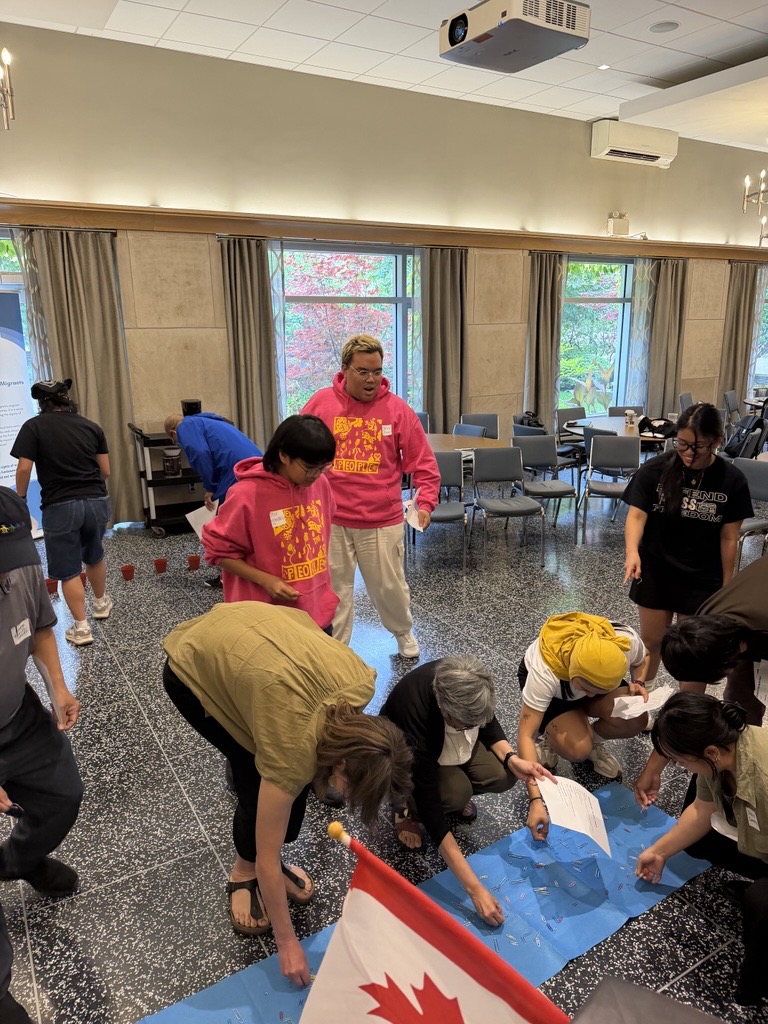
LISTEN TO INDIGENOUS VOICES by Brandi BilodeauKairos Canada has launched two new participatory workshops that deepen understanding as starting point for collective action on migrant justice. The Migrant Worker Exercise and Equal in Dignity, Equal in Rights: A Migrant Justice Workshop for Church Communities invite participants to examine how Canada’s temporary labour migration system shapes workers’ rights, choices and access to power.
Through the Migrant Worker Exercise, participants step into an interactive, role-based learning experience that explores the decisions and constraints migrant workers face in relation to employment, housing, workplace rights, immigration status and access to support. By examining how policy, power and unequal access to rights shape those choices, participants move beyond individual experiences to understand the systems that create and sustain injustice.
Equal in Dignity, Equal in Rights brings the Migrant Worker Exercise into faith-based settings, inviting church communities to connect migrant justice with dignity, solidarity and collective responsibility. Participants reflect on the role faith communities can play in moving beyond awareness and charity, toward deeper accompaniment and collective action joining migrant workers and migrant-led movements working for rights and systemic change.
“The goal is not simply to generate empathy for migrant workers,” says Leah Shifferaw, Migrant Justice Team Lead, Kairos Canada. “It is to foster solidarity. Solidarity asks us to recognize our connection to these systems, listen to migrant workers’ experiences and act together to create conditions where everyone is treated as equal in dignity and equal in rights.”
Together, the workshops offer churches, faith communities, schools, community organizations and others ways to deepen their understanding of migrant justice, examine the systems shaping workers’ lives and turn learning into collective action for change.
By Leah Seble-Shifferaw, Migrant Justice Team Lead
You may have noticed that Kairos has a new website, a new logo and a fresh look. This visual renewal reflects something deeper: an exciting new strategic plan, developed in partnership with ShiftWork Consulting, that places Reconciliation and the Two-Way Path at the centre of our work.
At this important moment of renewal, communities across Canada and around the world are grappling with urgent questions about justice, reconciliation and the future of our shared planet. The crises shaping our world are interconnected, and our response must be too.
Our new strategy is grounded in a simple conviction: justice is not built alone. It is built together – through relationships that endure beyond a single campaign, crisis or event. In the years ahead, Kairos is renewing how we show up as a connector, convener and collaborator, bringing people together across traditions, identities and geographies to act from conscience and build collective power for lasting change.
Walking the Two-Way Path
At the heart of this direction is the Two-Way Path. Indigenous and non-Indigenous peoples walk distinct but interconnected paths, each carrying rights and responsibilities while moving toward shared goals. Moving forward together does not mean becoming the same. It means honouring Indigenous rights, sovereignty and self-determination while strengthening the relationships between us.
Reconciliation, understood in this way, is not a destination or a separate project. It is a living relationship and an ongoing practice of truth-telling, accountability and transformation. It shapes not only what we do, but how we learn, govern, make decisions, share power, build partnerships, advocate and educate.
Our new logo, visual identity and website are outward signs of this renewed commitment. The clearer, more connected look reflects the organization we are becoming: rooted in relationships, guided by Indigenous sovereignty and ready to work across movements to confront root causes and transform systems. It honours more than two decades of partnership and advocacy while making space for what comes next.
Rooted and Rising
As Kairos marks 25 years, we are holding our history and our future together. We are rooted in decades of movement-building, faithful witness and relationships grounded in right relations and shared purpose. And we are rising – with humility, clarity and purpose – into a new chapter.
This fall, we look forward to sharing more of our strategic plan and celebrating this milestone with the Kairos community through online and in-person events.
Join us online as we share Kairos Canada’s renewed vision and strategic plan, a framework for reconciliation, collective action and justice.
Two Paths. One Journey. Shared Purpose.
Tuesday, September 29, 7:00 – 8:30 p.m. ET Online
About the logo
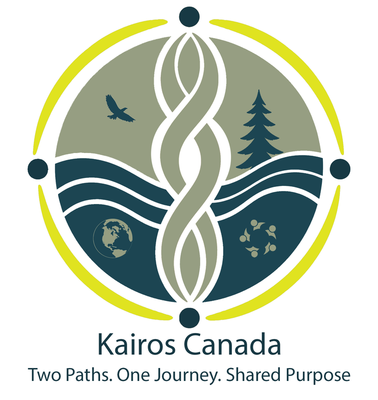
The logo, developed by Kiniw Studio, embodies interconnectedness: land, water, people and spirit held together through relationship, shared responsibility and respect. At its centre, the braid represents unity without erasing identity, while flowing waves evoke water as life, journey and connection, as well as distinct paths travelled in reconciliation. The circle expresses balance, wholeness and the continuity of generations. Trees symbolize strength, endurance and kinship with the land; the eagle carries vision, freedom and spirit. The globe and figures extend this vision across peoples and nations, affirming that justice, care for the Earth and human dignity are shared responsibilities.
by Cheryl McNamara, Communications & Advocacy Coordinator
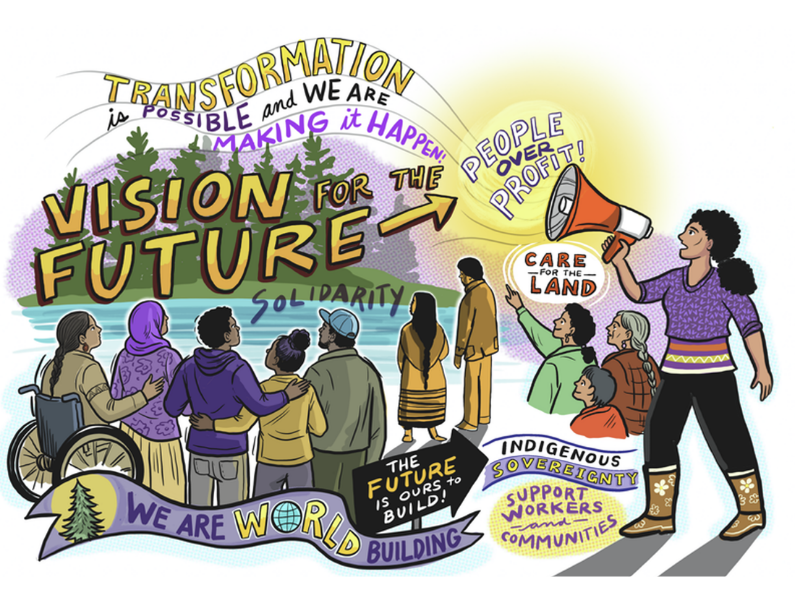
Kairos Canada is pleased to release Seeding an Economy of Life: A Guide for Dialogue on Just Transitions, a new resource designed to help churches, community groups and people of conscience host meaningful conversations about the future beyond fossil fuel dependence.
Recent decisions by the federal government signal a troubling retreat from the climate leadership and environmental responsibility this moment demands. Even as Canada doubles down on fossil fuel expansion and weakens environmental protections, communities of faith, justice advocates, Indigenous leaders, workers and young people continue to imagine a different future – one rooted in justice, community and hope.
Drawing on Kairos’ Strengthening Voices for a Just Transition project, the guide offers practical tools, exercises and reflections to help communities explore what a just transition could look like in their own context. Grounded in faith and informed by community dialogues from across Canada, it invites us to move beyond polarization and fear toward courageous conversations about economic justice, ecological well-being and the flourishing of all Creation.
At a moment when political leadership is falling short, this guide offers an opportunity to strengthen community leadership and cultivate the seeds of an economy that serves life rather than profit.
Download the guide today and start a conversation in your community!
By Beth Lorimer, Ecological Justice Coordinator
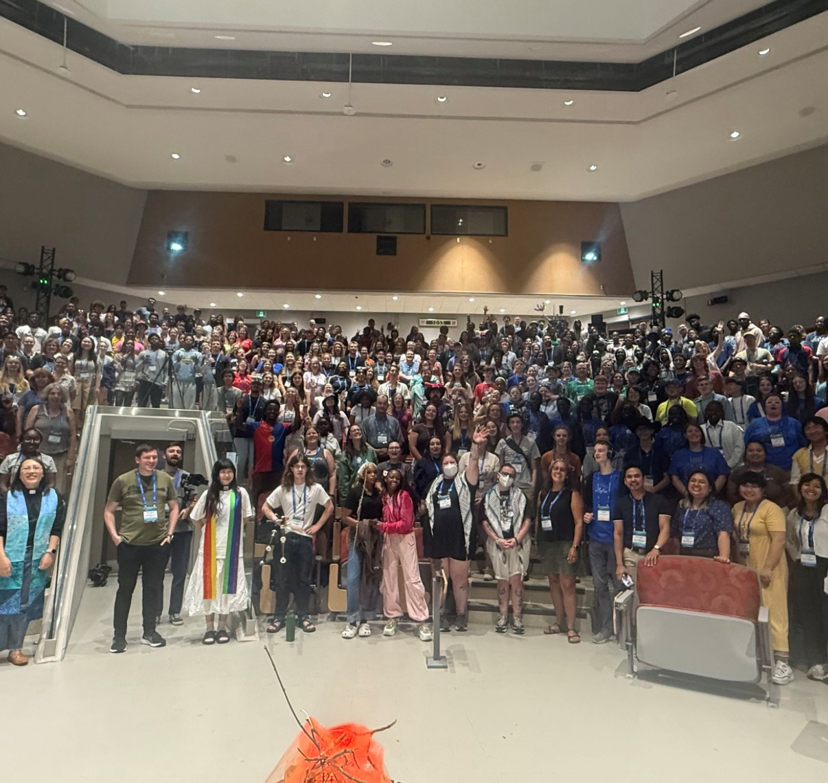
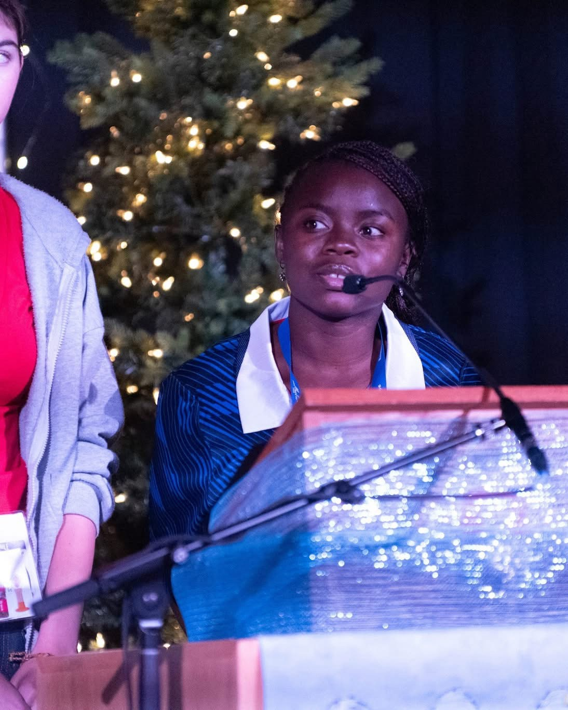
Creating spaces where young people can connect, learn from one another and engage around issues they already care about is fundamental to youth engagement. This approach was a cornerstone to Collective 2026, a national gathering for youth, young adults and leaders, held at Brock University in St. Catharines, Ontario from August 12 to 15. Co-Presented by the United Church of Canada and the Presbyterian Church in Canada, it attracted more than 500 participants.
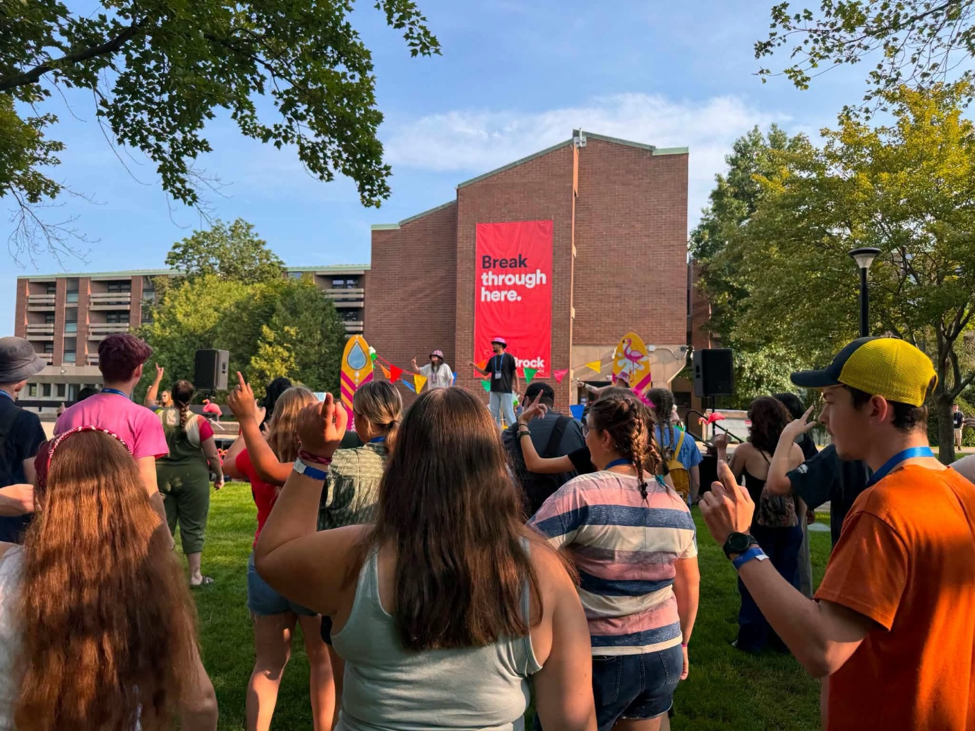
The event combined workshops and learning with recreation, informal conversations, small groups and opportunities to build relationships. Several workshops positioned young people as leaders and active participants rather than simply as recipients of information, including sessions on youth advocacy, political leadership and youth-led engagement. Additional programming included Indigenous justice and reconciliation, climate justice, global justice, political engagement and community-building.
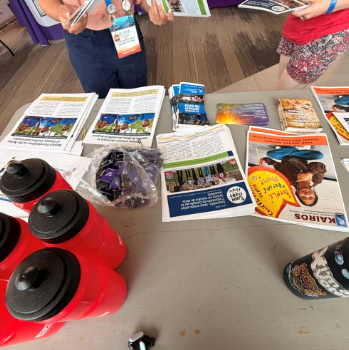
Representing Kairos Canada, I hosted a marketplace table where I shared resources and information about Kairos’ work, including Women Peacebuilders at the nexus of Climate, Conflict and Gender, our past work in Jubilee: Turn Debt into Hope and other justice-related initiatives.
Connection to Kairos’ Women Peacebuilders project and global partnerships
Collective 2026 also inspired me to think about how the work of Kairos’ Women Peacebuilders project can connect with younger generations in Canada. The programming included discussions connecting global justice, climate change, poverty and humanitarian issues, including a session that brought young leaders from Kenya and the Philippines into the climate conversation. This demonstrated the value of creating opportunities for young people in Canada to hear directly from people and movements working in different countries, rather than presenting global justice issues only through an organizational or Canadian lens
For the Women Peacebuilders project, this inspires opportunities to introduce young people to the interconnections between climate, conflict and gender, while also creating space for partners and women peacebuilders to share their own knowledge and experiences. Rather than designing youth engagement around “teaching” young people about the triple nexus, we could explore ways for young people to learn with partners, ask questions, exchange perspectives and identify how their own communities can contribute to broader movements for justice.
My participation in Collective 2026 reinforced for me that meaningful youth engagement is ultimately about relationships, mutual learning, participation and creating conditions for people to act together.
The event demonstrated that learning about justice can happen alongside community, creativity, play and relationship-building. For Kairos, there is an opportunity to bring this approach into our broader movement-building work and particularly into our Youth Strategy, currently under development. This means not creating another program for young people, but offering more opportunities to learn with them, connect them with movements and resources, support what they are already doing and build relationships that can grow into meaningful collaboration and collective action.
By Danielle Kamtié, Africa Partnerships & Global Climate Justice Coordinator
Kairos is deeply grateful to the leadership and service of several volunteers who are stepping down from their roles.
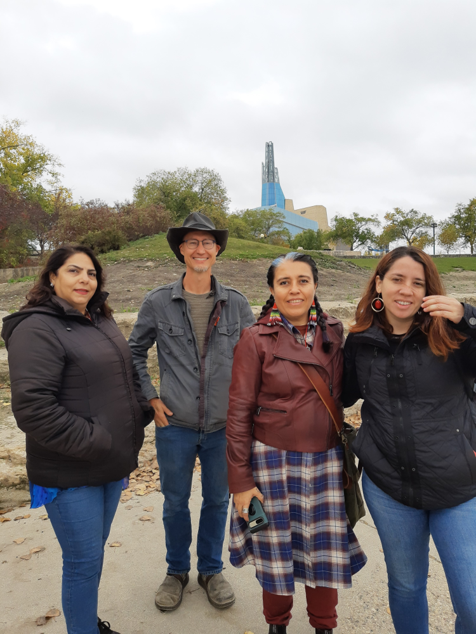
Debby Dandy, regional representative for Kairos Northwest Ontario and Manitoba, and Carin Crowe, vice-chair have led the Kairos movement in their region for the better part of two decades.
Other key members of the Coordinating Committee who have concluded their service in recent years are Yvonne Bearbull, Kenora representative, Ellen Wood, past regional representative, Ellen Cook, treasurer, and Kerry Saner Harvey, secretary and logistics wizard.
Debby Dandy was not the first Kairos regional rep, but perhaps the second in what was then known as the Cambrian-Agassiz region. Debby served in this volunteer regional representative role – a coordinating role across a vast region – for several years during the latter half of Kairos Canada’s first decade. Following this, she led Kairos Brandon. In 2022, Debby’s strong leadership skills were again called into the regional sphere.
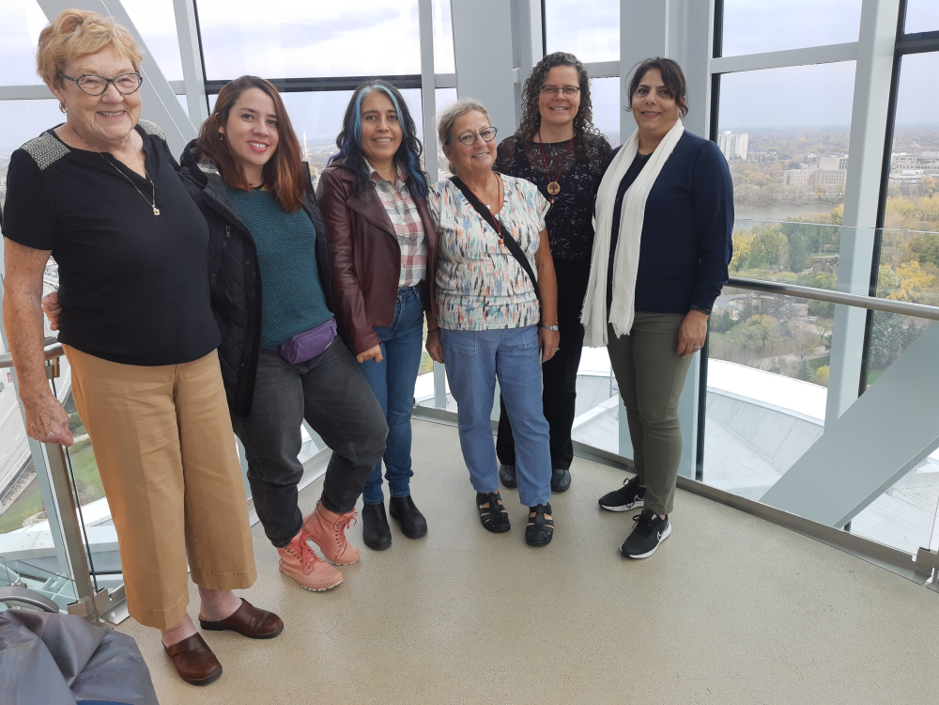
“I have always had a deep concern for social justice issues and found that Kairos was an organization where I could learn and respond,” says Debby. “The personal growth that I experienced as an early regional representative was powerful. The opportunity to learn directly from those affected by injustice in Manitoba, Canada and around the world was hugely meaningful. The relationship between my faith perspective and the work of Kairos kept me engaged and active over the years. One of my favorite memories is being in Ottawa and doing a Blanket Exercise on the lawn of the Parliament building. I have also been impacted by the opportunity to facilitate Blanket Exercises and participate in the learning and awareness raising of others.”
With one foot in the regional work, Debby’s heart and hands have really been in local climate action. Also in 2022, Debby and her friend Madelyn Robinson were key actors in establishing Sustainable Brandon. Watch the video on how this grew out of a Faithful Climate Conversation, a For the Love of Creation program that Kairos supports.
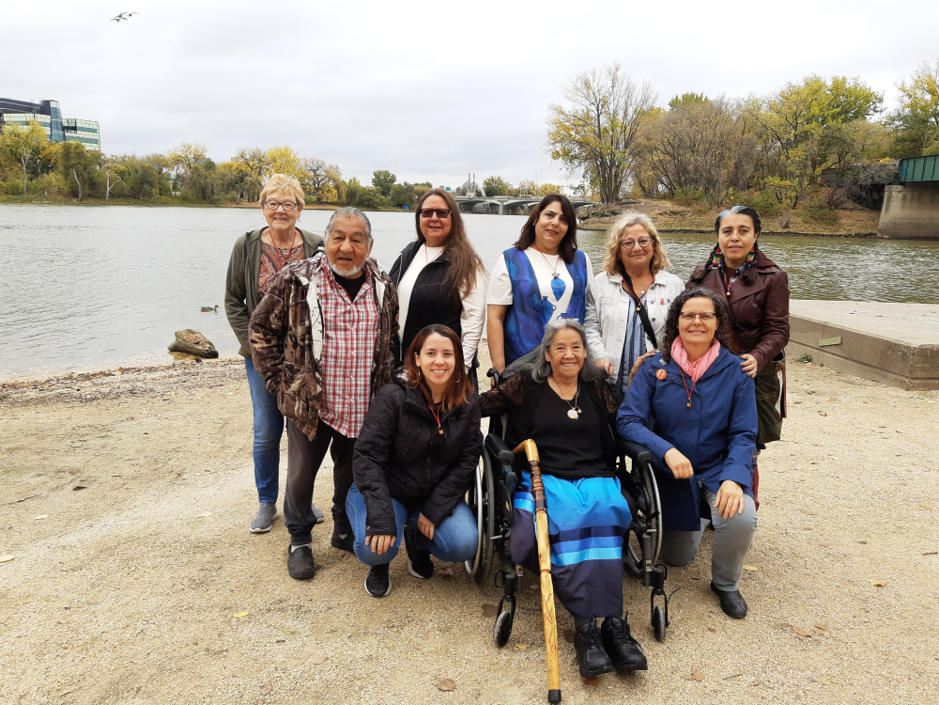
Carin Crowe took on the regional representative role in 2012. Having a nursing background, Carin was used to a running a tight ship and getting things done. She saw ways to strengthen the regional coordinating committee by modelling it after the Kairos Board with one representative from each denomination in Kairos’ membership. Within a couple of years, she had a full complement of representatives and a very active committee.
“I joined Kairos North East Justice and Peace in 2003 on the suggestion of my minister,” writes Carin. “He knew I had a passion for social justice. The many issues Kairos responds to have become important to me. I’ve learned so much! I became Regional Chair in 2010 and served for five years and have been active past chair since. I’ve had the opportunity to meet and work with folks from coast to coast. Through Kairos I was trained in delivering the Kairos Blanket Exercise. [This was a] turning point for me. I was fortunate to deliver the Blanket Exercise for 15 years to hundreds of people across Manitoba. My biggest Blanket Exercise was on the grounds of our provincial Legislature to 250 people. Thanks, Kairos for all I’ve learned and the wonderful people I’ve met!”
Carin too will continue her work in local justice initiatives through her ongoing involvement in Kairos North East Justice and Peace.
Debby and Carin, along with Yvonne, Ellen, Ellen, Kerry and others have been the backbone of the Kairos movement in Northwest Ontario and Manitoba. Kairos Canada thanks them for their many years of service and wishes them all the best in their future endeavours.
By Shannon Neufeldt, Member Relations and Network Coordinator
Human rights group, B’tselem – Israeli Information Centre for Human Rights, a Kairos solidarity partner, has released a new report – the Elimination Project: Israel’s Systematic Dismantling of Palestinian Collective Life in the West Bank.
The report is a chilling documentation of the systemic violence and intimidation, movement restrictions, economic strangulation, social and political destruction, and ethnic cleansing and territorial takeover experienced by Palestinians in West Bank. This is the nightmarish situation that our Palestinian partners tell us about, often referring to it as the silent genocide. It is the basis of our advocacy with the Canadian government for stronger sanctions against the state of Israel.
We commit to using this report to strengthen our urgent call to the Canadian government for a complete end to political, financial and military support that contributes to the state of Israel’s serious and systematic violations of international law.
By Rachel Warden, Partnerships Manager
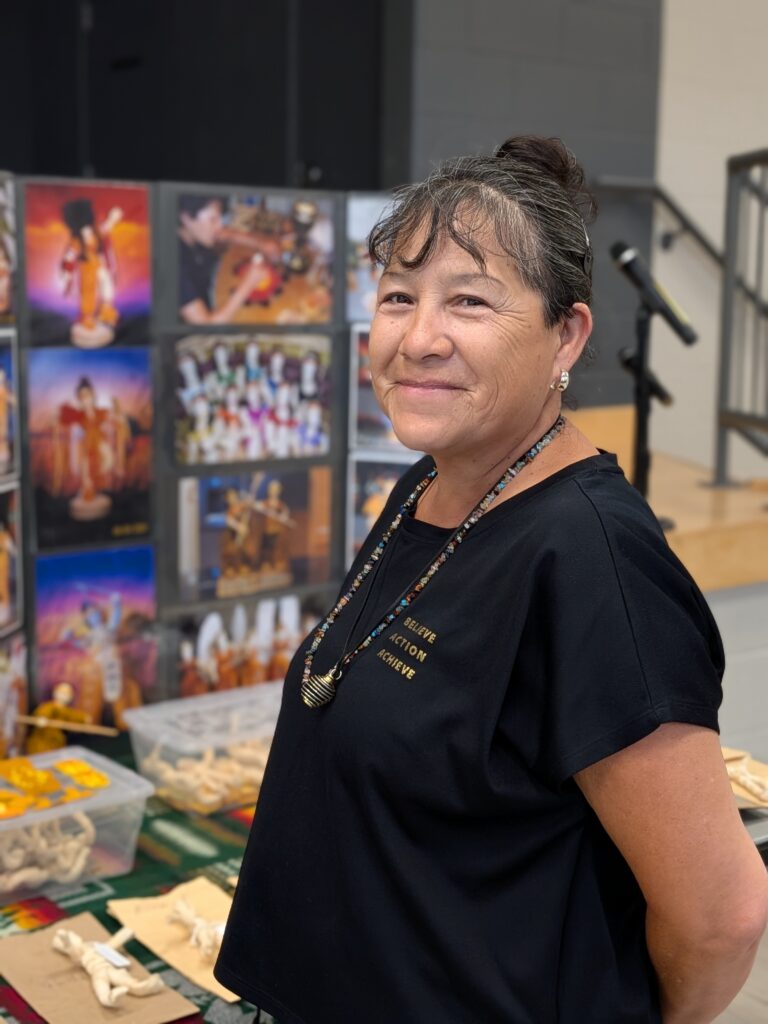
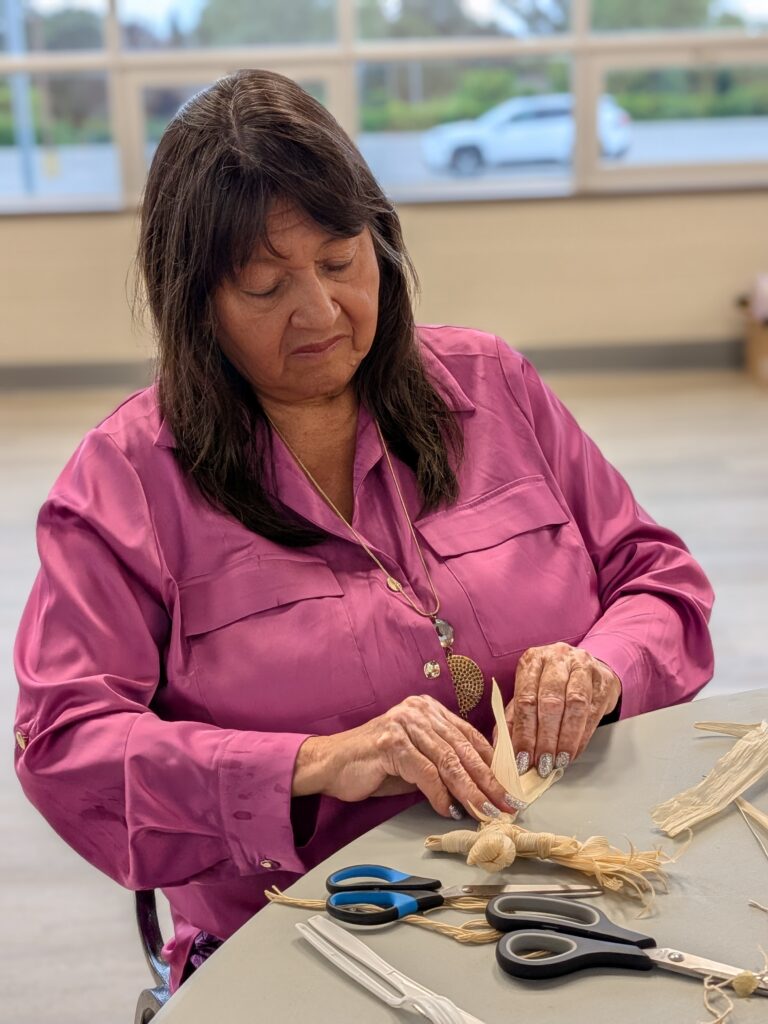
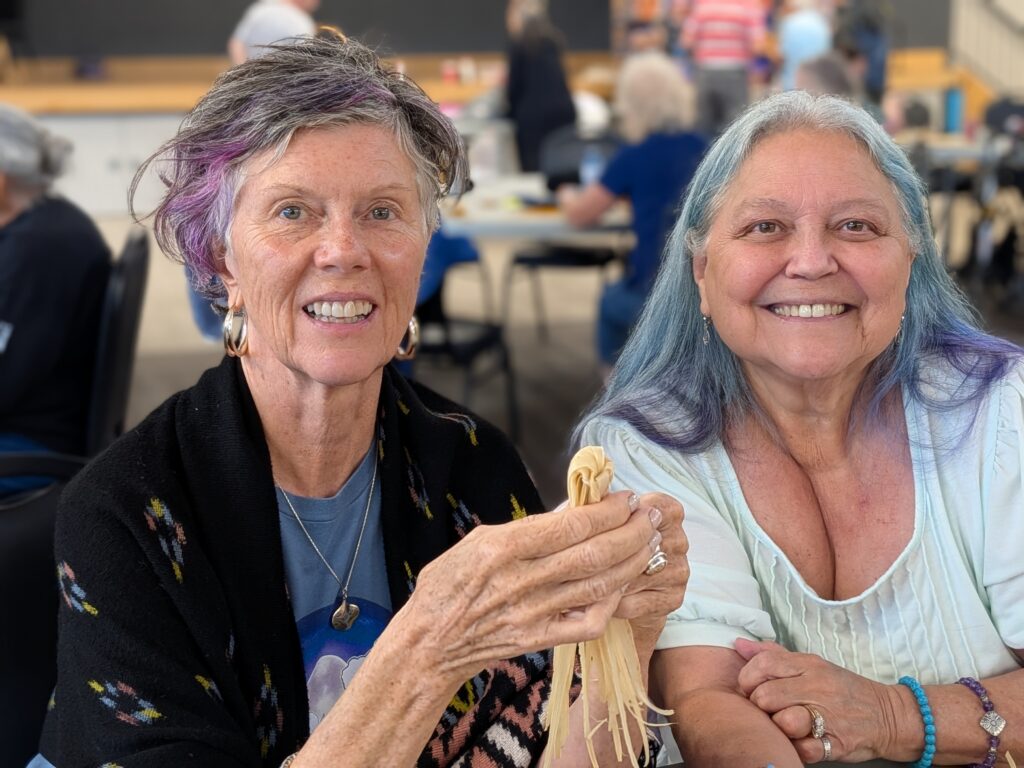
Hosting Wisdom in Action: Elders Leading Change at the Six Nations Community Hall was a truly meaningful and memorable experience. Over two days, community members gathered on Six Nations of the Grand River to learn, create and share in a space filled with culture, laughter and connection.
We were honoured to begin with an opening offered by Clayton Longboat and a smudge led by Kevin George, grounding the gathering in a good way and preparing us for the teachings that followed.
On the first day, we welcomed a smaller group of approximately 15 participants, which created an intimate setting for learning, conversation and relationship-building. By the second day, attendance had doubled, filling the hall with even more energy, laughter and community spirit. Some participants travelled more than two and a half hours to attend, which was incredible to see and showed just how meaningful these opportunities for cultural learning and connection are.
At the heart of the event was a two-day corn husk doll-making workshop led by sixth-generation artist Paula Longboat and her son, Clayton Longboat. Paula generously shared teachings passed down through many generations about corn husk, its use as medicine and the deeper meaning carried through the making of corn husk dolls. With every step, participants were reminded that this was about much more than creating something with our hands – it was about carrying teachings forward, honouring the generations who came before us and recognizing the healing that can happen when knowledge is shared in community.
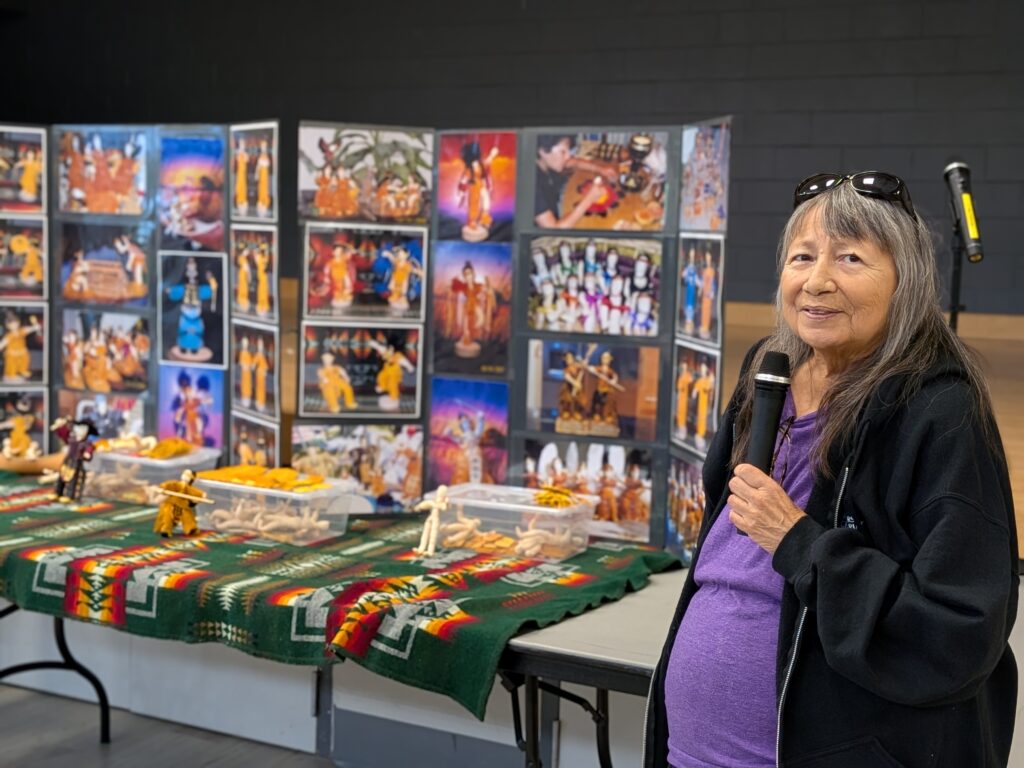
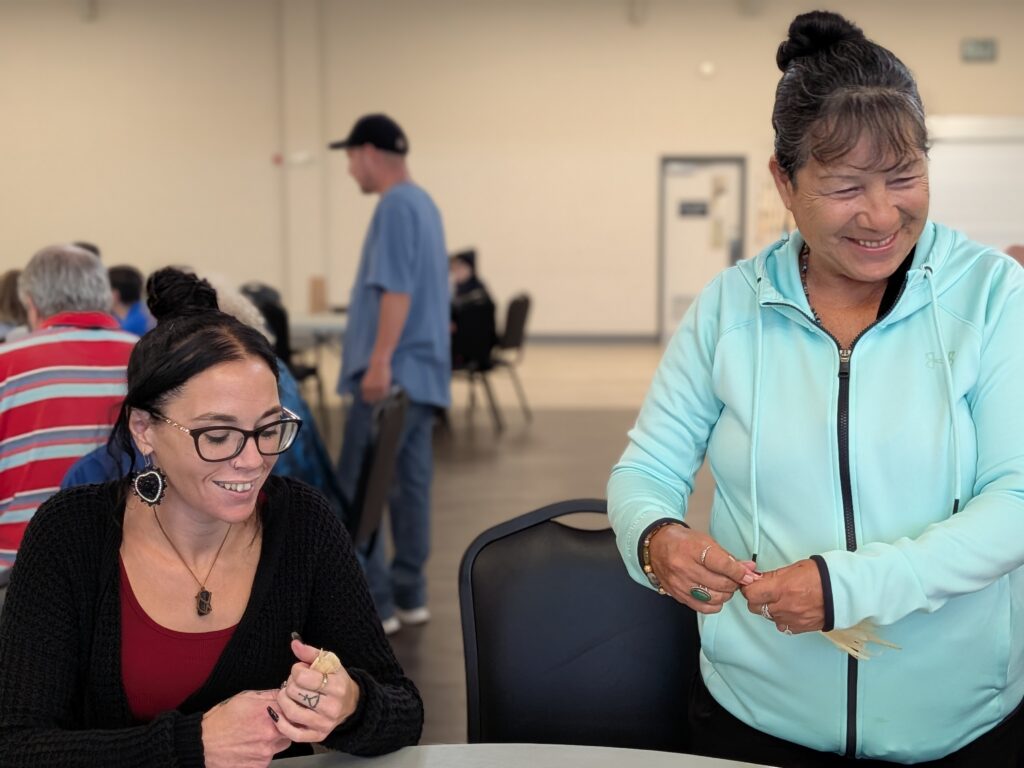
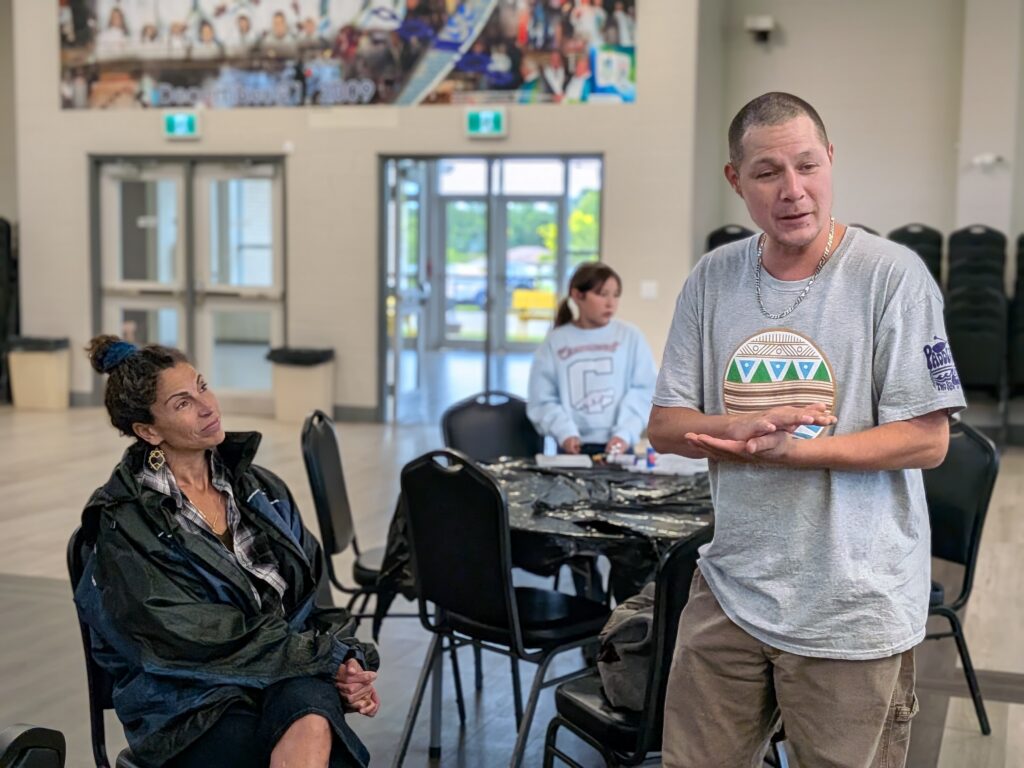
One teaching that stayed deeply with me was shared with Paula by her grandmother. She taught that when someone is experiencing a heavy day feeling overwhelmed by sadness, anger, anxiety or emotional struggle, they can soak white corn husk in water and drink the water as a traditional medicine to help clear away that heaviness and invite peace and calmness back into the spirit. I was grateful to receive this teaching and to witness how knowledge and medicine continue to be carried from one generation to the next.
We were also deeply honoured to hear from Elder Shirlene Bomberry, a residential school survivor, and Grandmother Gail Whitlow. Their stories, wisdom and presence brought even greater depth to the gathering and reminded us of the strength, resilience and responsibility carried by Elders and Knowledge Keepers. Their words created space for learning, reflection and meaningful conversations that will stay with many of us long after the event.
The wonderful turnout showed how important it is to create opportunities where people can come together across generations to listen, learn and build relationships. Over the two days, we shared teachings and memories, enjoyed many laughs and formed new connections. It was especially encouraging to hear that many of the Elders and participants are looking forward to working with us again and being part of future events.
I left the gathering with a full heart and a deep sense of gratitude for every person who helped make it possible. Wisdom in Action was more than a workshop, it was a celebration of culture, community and the living knowledge that continues to guide and connect us. The relationships built during these two days will continue beyond this gathering, creating new opportunities to learn from one another, work together and carry these teachings forward.
This program was funded in part by the Government of Canada’s New Horizons for Seniors Program.
By Brandi Bilodeau, Indigenous Rights Coordinator
Delegates from Abya Yala (Colombia) and Turtle Island (Alberta) will gather in Edmonton to share how they defend women, communities and the environment from the impacts of Canadian resource extraction while advancing Indigenous-led pathways to climate justice and sustainable peace.
(Toronto – Treaty 13 with the Mississaugas of the Credit) – Indigenous women leaders, peacebuilders and community advocates from Abya Yala (Colombia) and Turtle Island (Alberta) will gather in Edmonton, September 9-14 for Voices from the Rivers of Abya Yala and Turtle Island: A Knowledge Exchange to share their work in defending their communities and environments from the impacts of Canadian resource extraction and building just transition alternatives.
This Exchange is part of Kairos Canada’s Women Peacebuilders at the Nexus of Climate, Conflict and Gender (WP-CCG) project, which strengthens women’s leadership and collective action for climate justice and sustainable peace in four conflict zones: Colombia, the Democratic Republic of Congo, Palestine and South Sudan. Through training, advocacy and economic tools, the project supports women to influence policy, build resilient livelihoods and advance gender equality in their communities.
Across Abya Yala (the Americas), Indigenous peoples and women-led movements continue to defend land, water, life and community from the impacts of extractive industries. Communities face many shared challenges, including the mining, oil and gas sector’s role in environmental degradation and threats to human rights, including gender-based violence and displacement.
The delegates from Colombia are Ana Teresa Ruerda Lozada, Project Coordinator of the Organización Femenina Popular (OFP), a Kairos partner of the Women Peacebuilder project; and Paola Chindoy, a Kamëntšá Indigenous leader from Mocoa, Colombia, and president of ASOMI, which is a member of La Red. Learn more about Ana Teresa Ruerda Lozada and Paola Chindoy.
The exchange features one public event, Kairos Prairies North Regional Gathering: Voices from the Rivers of Abya Yala and Turtle Island, September 12 at Bent Arrow Traditional Healing Society in Edmonton. The all-day event will explore connections between water, territory, gender justice, decolonization and collective action. It will feature the Kairos Blanket Exercise (in person only), facilitated by Indigenous leaders Taylor Dumais and Preston Huppie, and Cuerpo Territorio (Body-Territory) exercises, facilitated by Paola Chindoy with support from Ana Teresa Ruerda Lozada.
“This knowledge exchange is a chance to honour the leadership of Indigenous women and talk openly about how violence against women is connected to violence against the land and waters,” says Brandi Bilodeau, Indigenous Rights Coordinator, Kairos Canada. “When we come together through ceremony, storytelling and reflection, we learn from one another, build stronger relationships across territories and movements and imagine a just future rooted in Indigenous sovereignty, care and shared responsibility.”
Learn more about Voices from the Rivers of Abya Yala and Turtle Island: A Knowledge Exchange
About Kairos Canada
Kairos Canada brings people together to deepen analysis, build relationships and mobilize collective action that transforms systems. Grounded in Indigenous rights and sovereignty, faith-and-conscience-rooted justice and global solidarity, we work across movements to confront root causes and create lasting structural change. Learn more: Kairos Canada website.
Media Contact:
Cheryl McNamara, Communications and Advocacy Coordinator, KAIROS Canada, cmcnamara @ kairoscanada.com